From the editors (preface to first issue)
“A destiny that leads the English to the Dutch is strange enough; but one that leads from Epsom into Pennsylvania [...] is touched by that dark miracle of chance which makes new magic in a dusty world.”
Thomas Wolfe
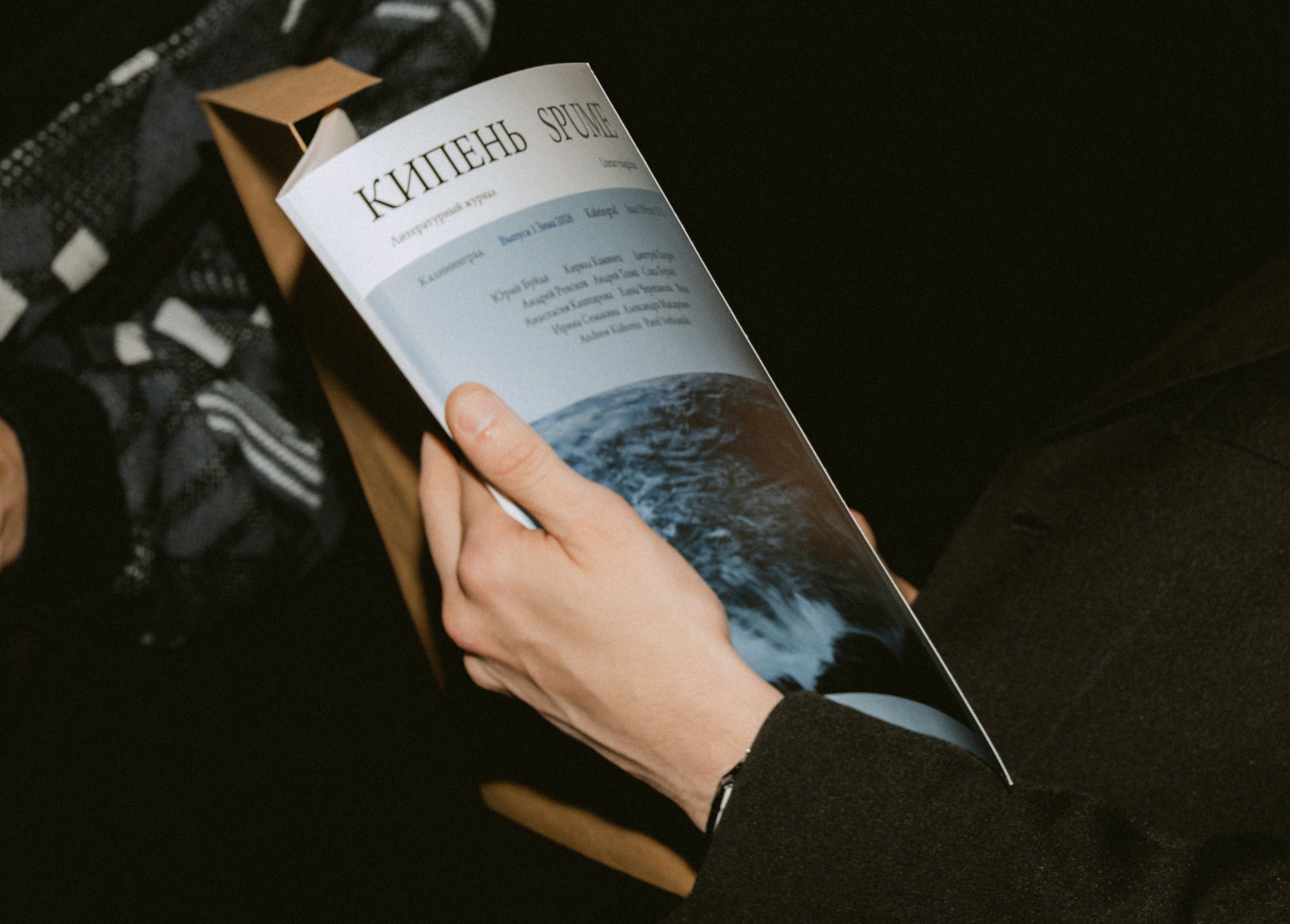
A destiny that leads one to launch a literary magazine with an English-language section in Kaliningrad in 2025 is certainly touched by that same miracle of chance which makes new magic in a dusty world. We would not call it dark, though.
English happens to be the language of international cooperation, diplomacy, and it makes up a substantial share of the cultural output of the entire Western civilisation, inheriting this role from French, which eventually superseded Latin—English gets heard. It is indeed the lingua franca of the world, and as such, the language of contemporary cultural exchange in which literature assumes a most prominent place.
We believe that Kaliningrad, situated as it is at the junction of cultural projects and holding immense geopolitical importance, has a lot to offer not only to the Russian-speaking or Anglophone world, but to all other worlds spread across our planet. After all, this is a city of European ruins, and ruins — as a language of its own — have remained unsurpassed in their eloquence.
There is another, more practical reason applying to wielders of letters. Writing and reading in foreign languages can teach one a lot about the craft in their native tongue.
In the words of Ezra Pound,
“Different languages—I mean the actual vocabularies, the idioms—have worked out certain mechanisms of communication and registration. No one language is complete. A master may be continually expanding his own tongue, rendering it fit to bear some charge hitherto borne only by some other alien tongue, but the process does not stop with any one man.”
Not too long ago, almost every author was highly proficient in at least one foreign language. We believe that this ancient tradition of learning and mastering tongues should be restored. It allows us to say more, see deeper, hear more keenly, and understand the core nature of language, including our own. And this, ultimately, is a sacred duty of the author.